Short layered hairstyles over 50 offer an adaptable way to introduce movement, shape, and personality without committing to one particular short haircut. Carefully positioned layers can encourage crown lift, enhance natural waves or curls, reduce unwanted bulk, and give straight hair greater dimension. Pixies, bixies, bobs, crops, and short shags can all benefit from layering when it is tailored to individual density and texture.
The key is choosing layers that work with the hair rather than simply adding more of them. Fine or thin hair often benefits from restrained layering and stronger perimeters, while thick hair may need additional internal shaping. These 20 short layered hairstyles over 50 provide inspiration for different textures, maintenance preferences, and personal styles.
Why Strategic Layering Makes Such a Difference
Layering changes how weight is distributed throughout a haircut. Shorter crown sections can create elevation, face-framing pieces introduce softness, and internal layers can improve movement without necessarily producing an obviously choppy appearance.
However, more layers do not automatically mean more volume. Excessive layering can make lower-density hair appear thinner through the ends. A successful layered haircut considers strand thickness, overall density, natural texture, growth patterns, and the amount of daily styling you realistically want to do.
Soft Layered Pixie
A soft layered pixie creates gentle crown movement while maintaining enough length through the upper sections for styling flexibility. Subtle graduation around the ears and neckline keeps the silhouette neat, while longer front pieces provide softness around the forehead.

Apply lightweight mousse to damp roots and finger-dry the crown with moderate elevation. Direct the front according to your preferred part, then allow the sections to cool naturally. Define only several ends with flexible styling cream. Avoid separating every layer because broader sections usually maintain a softer, fuller-looking appearance.
Layered Bixie With Side Bangs
A layered bixie combines pixie-like shortness through the back with slightly longer bob-inspired sections around the crown and sides. Side-swept bangs introduce diagonal movement while the layered upper shape provides texture without requiring an extremely short overall silhouette.

Apply volumizing foam around the roots and blow-dry the crown with gentle elevation. Sweep the fringe diagonally and keep the sides softly shaped. Once dry, use minimal styling cream through selected ends. Leaving several layers naturally grouped prevents the finished style from becoming overly piecey.
Short Layered Bob With Crown Volume
A short layered bob uses carefully positioned upper layers to create movement around the crown while maintaining a stronger perimeter below. This balance can provide visible lift without sacrificing the substantial outline that makes a bob look polished.

Apply root-lifting mousse and blow-dry the crown against its natural direction before settling it into place. Use a round brush to create restrained movement through the ends. Keep the lower sections relatively full. Flexible hairspray can support elevation without creating a stiff, helmet-like finish.
Feathered Pixie With Long Fringe
A feathered pixie features airy crown layers paired with a longer fringe that can sweep across the forehead or away from the face. The contrast between compact sides and fluid upper pieces creates movement while maintaining a sophisticated short silhouette.

Blow-dry the upper sections upward and slightly outward with a small round brush. Direct the fringe toward one side and allow it to remain flexible. Once cool, separate several layers gently with your fingertips. Finish with lightweight spray to maintain movement rather than locking every section into place.
Layered French Bob
A layered French bob keeps its characteristic jaw-level proportions while introducing subtle movement throughout the surface. Gentle layers can soften a traditionally structured bob and work particularly well when the hair already contains natural bends or waves.

Apply lightweight mousse or wave foam to damp hair according to your texture. Blow-dry for a polished result or diffuse when encouraging natural movement. Keep the perimeter clearly visible and avoid excessive thinning through the ends. Arrange several facial pieces with your fingers for a relaxed finish.
Short Shag With Wispy Bangs
A short shag uses irregular layering to create relaxed movement through the crown, sides, and perimeter. Wispy bangs provide delicate forehead framing and blend naturally into the surrounding layers, producing a casual hairstyle with plenty of personality.

Apply texture mousse to damp hair and finger-dry according to the natural movement. Keep the fringe light and avoid coating it with heavy styling products. Once completely dry, define selected crown and side pieces. Controlled irregularity preserves the shag’s character without making the haircut appear excessively fragmented.
Layered Pixie Bob
A layered pixie bob provides additional length around the crown and sides while maintaining a compact neckline. Carefully graduated sections create a rounded, dimensional silhouette that offers more styling versatility than a traditional closely cropped pixie.

Apply lightweight volumizing foam and blow-dry the crown with gentle elevation. Sweep the front pieces sideways or away from the forehead depending on your preference. Once dry, define selected ends with flexible cream. Keep the lower sections softly controlled so the upper movement remains the main focal point.
Short Layered Hair With Curtain Bangs
Curtain bangs create a soft opening around the forehead and blend gradually into short layered sides. Their outward movement complements crown layers beautifully, creating facial framing without requiring a heavy, straight-across fringe.

Blow-dry the bangs away from the face using a small round brush while maintaining gentle root elevation. Shape the surrounding layers according to their natural movement. Once cool, loosen the front pieces with your fingers. Lightweight finishing spray can maintain the curved shape without making the fringe stiff.
Tousled Layered Pixie
A tousled pixie uses uneven directional movement through the crown to create a relaxed, contemporary finish. Keeping the sides slightly neater provides contrast and prevents the haircut from losing its overall structure despite the intentionally undone upper texture.

Apply lightweight styling foam and finger-dry the crown in several directions. Once completely dry, define a few upper sections using minimal matte cream. Avoid styling every strand individually. Leaving some pieces naturally grouped helps the haircut retain softness and prevents excessive separation through finer hair.
Layered Bob With Side-Swept Fringe
A layered bob paired with side-swept fringe creates movement around the crown while introducing soft diagonal framing across the forehead. Maintaining enough weight through the lower perimeter keeps the haircut balanced and prevents the ends from appearing unnecessarily thin.

Apply volumizing mousse and blow-dry the crown with moderate elevation. Direct the fringe toward one side using a round brush or your fingers. Keep the lower sections smooth and comparatively substantial. Once cool, loosen the layers gently and finish with flexible hairspray for movable support.
Short Layered Curly Bob
A layered curly bob uses carefully positioned shaping to prevent natural curls from accumulating too much weight around the lower perimeter. The right layer placement can encourage definition and create balanced volume without removing the density that gives curls their beautiful presence.

Apply curl cream or lightweight gel to wet hair and encourage natural curl groups with gentle scrunching. Air-dry or diffuse carefully until completely dry. Once set, lift selected roots for shape without separating every curl. Regular shaping helps maintain balanced proportions as the layered sections grow.
Choppy Pixie With Soft Bangs
A choppy pixie creates visible separation through the upper layers while soft bangs balance the stronger texture with gentle forehead framing. Keeping the sides controlled prevents the intentionally piecey crown from making the overall silhouette appear excessively busy.

Apply lightweight texture mousse and finger-dry the upper sections in alternating directions. Arrange the bangs softly across the forehead and avoid heavy product near the front. Once dry, define only selected pieces with matte cream. A restrained approach keeps the texture contemporary rather than overly spiky.
Layered Stacked Bob
A layered stacked bob combines graduation through the back with longer sections toward the front, creating natural elevation around the crown. Controlled stacking provides structure while surface layers introduce enough movement to keep the haircut from appearing overly rigid.

Apply root-lifting mousse around the back and blow-dry with controlled elevation. Keep the front pieces smoother and slightly longer. Once cool, loosen the crown gently with your fingertips. Avoid excessive teasing because the graduated structure should already provide much of the desired height and rounded shape.
Wavy Layered Bixie
A wavy bixie allows natural bends to interact with short, strategically positioned layers. Additional length through the crown and fringe gives waves room to develop, while a compact neckline keeps the hairstyle lightweight and clearly defined.

Apply wave foam to damp hair and gently scrunch the upper sections. Air-dry or diffuse using controlled airflow. Once completely dry, arrange the front with your fingers and lift selected roots. Avoid brushing through the finished texture because preserving wave groups maintains definition and helps reduce unnecessary frizz.
Layered Crop With Side Part
A layered crop with a side part creates directional movement while maintaining practical short proportions. The shifted part naturally provides additional root elevation on one side, and soft upper layers prevent the haircut from appearing flat or overly uniform.

Establish the part while the hair is damp and apply lightweight mousse. Blow-dry the crown against its natural direction before settling the layers into place. Keep the shorter sections streamlined and define several longer pieces with flexible cream. Finish sparingly to preserve natural movement throughout the style.
Short Layered Hair With Flipped Ends
Flipped ends give a short layered haircut playful outward movement around the perimeter. The directional styling emphasizes individual layers while creating visual width, making a simple bob or longer crop feel more energetic without dramatically changing the underlying haircut.

Apply heat protection and lightweight volumizing mousse before blow-drying. Use a round brush or styling tool to direct selected ends outward. Keep the flips broad and irregular rather than curling every piece identically. Once cool, separate them gently with your fingers and finish with flexible spray.
Layered Silver Pixie
A layered pixie can showcase silver, gray, or white hair beautifully because tonal variation emphasizes the different lengths throughout the crown. Keeping the neckline neat provides structure while soft upper layers create dimension and movement.

Apply lightweight volumizing foam and finger-dry the crown with gentle elevation. Once dry, arrange selected pieces according to the natural color variation and texture. Use minimal styling cream to avoid dulling the surface. A flexible finish preserves movement while allowing silver tones to remain visually prominent.
Layered Bob for Fine Hair
A layered bob for fine hair requires restraint so movement is created without sacrificing too much density. Longer surface layers paired with a substantial perimeter can encourage lift around the crown while keeping the lower sections looking fuller.

Apply root-lifting mousse and blow-dry with moderate elevation. Create broad bends through selected sections rather than heavily curling every layer. Avoid excessive thinning or aggressive razoring through the ends. Once cool, use lightweight texture spray for additional grip while preserving the bob’s substantial lower outline.
Short Layered Natural Coils
Short layered natural coils can create a beautifully balanced silhouette by distributing volume intentionally around the crown and sides. Thoughtful shaping allows individual coil groups to remain expressive while preventing one area from becoming disproportionately heavy.

Apply moisturizing leave-in conditioner and defining product to wet hair. Encourage natural coil groups with minimal manipulation, then air-dry or diffuse carefully. Once completely dry, lift selected roots to refine the shape. Avoid excessive separation if maintaining definition is important. Regular shaping helps the layered silhouette remain balanced.
Voluminous Swept-Back Layered Pixie
A swept-back layered pixie preserves additional length through the crown and front, allowing those sections to move upward and backward. Keeping the sides comparatively compact creates contrast, making the upper volume appear more pronounced and polished.
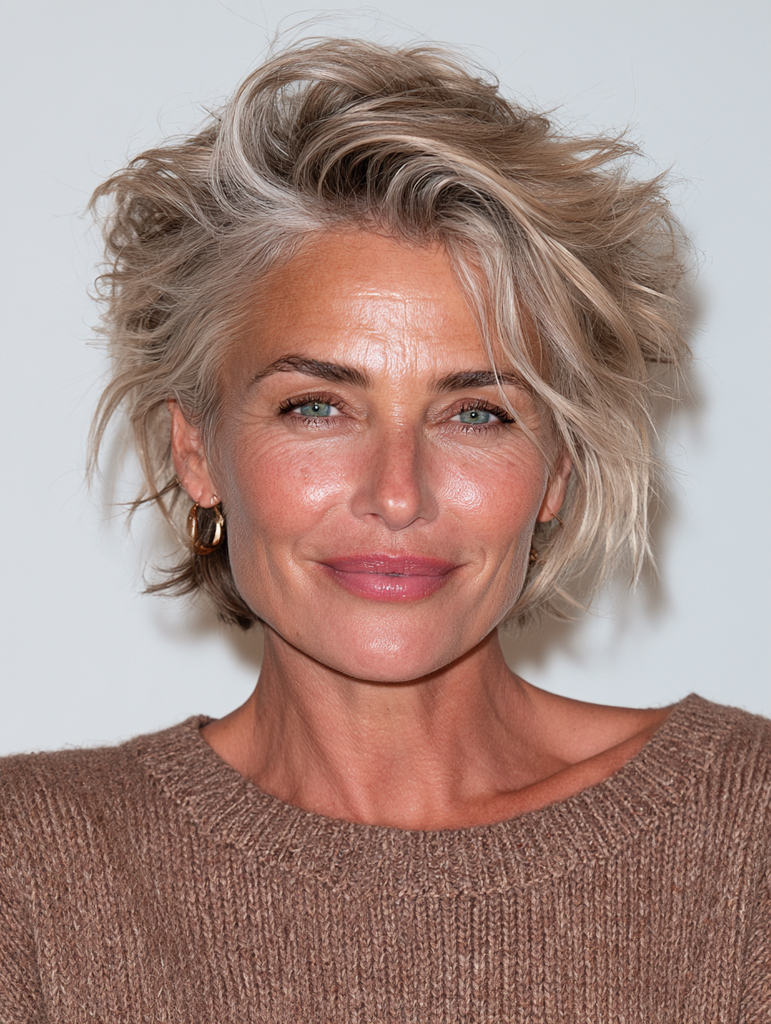
Apply root-lifting mousse through the crown and blow-dry upward and backward using a small round brush or your fingers. Let the hair cool before arranging it. Define several upper layers with lightweight cream and finish with flexible hairspray so the volume remains controlled without becoming rigid.
Why Layered Short Hair Maintains Its Appeal
Layered short hairstyles remain adaptable because the same basic haircut can change considerably through small adjustments. Longer bangs can soften a pixie, crown layers can reshape a bob, and natural waves can transform a structured bixie into something more relaxed and dimensional.
Layering can also highlight gray, silver, highlighted, or multidimensional hair because different lengths catch light separately. However, successful layering depends on density. Fine or thinning hair usually needs fewer, more strategic layers, while thicker hair may tolerate more internal weight removal.
How to Style Short Layers Without Overworking Them
Start with a lightweight product appropriate for your texture. Volumizing mousse can support finer strands, while curls and coils generally benefit from moisture and definition. Concentrate styling around the crown and fringe because those areas strongly influence the overall shape.
Use finger-drying for relaxed texture or a small round brush when you want smoother lift. Avoid coating every layer with wax or paste, since too much separation can make the haircut appear fragmented. A few deliberately defined pieces usually create enough dimension while maintaining natural softness.
Final Thoughts
Short layered hairstyles over 50 offer enormous flexibility, from feathered pixies and stacked bobs to curly crops, textured bixies, silver styles, and modern shags. Strategic layers can create movement, manage bulk, emphasize texture, or introduce crown lift depending on how they are positioned.
Choose the amount of layering according to your density, texture, maintenance preferences, and desired silhouette rather than age alone. When the cut preserves weight where necessary and removes it thoughtfully elsewhere, short layered hair can feel fresh, flattering, sophisticated, and wonderfully individual.
