Long hairstyles with layers and bangs combine flowing length with strategically placed movement around the face. Layers can remove heaviness, encourage natural texture, and create dimension, while bangs provide an immediate focal point around the eyes and forehead. From airy curtain fringe to dramatic sweeping bangs, this combination offers countless ways to refresh long hair without sacrificing length.
The strongest result comes from matching the layers and fringe to your density, texture, facial proportions, and styling routine. Fine hair often benefits from restrained layering, whereas thicker hair can accommodate more extensive weight removal. These 20 long hairstyles with layers and bangs explore soft, glamorous, textured, romantic, and contemporary approaches for transforming lengthy hair.
How Layers and Bangs Work Together to Shape Long Hair
Bangs look most cohesive when they transition naturally into surrounding layers. Curtain fringe can flow into cheekbone-length pieces, while side-swept bangs blend beautifully with longer facial layers. Full bangs create stronger contrast and can balance especially well with softer layering throughout the lengths.
Texture also affects the final result. Straight hair reveals layer placement clearly, while waves and curls naturally soften transitions. Consider how your hair behaves during everyday styling so the haircut remains attractive without requiring a professional blowout each morning.
Long Butterfly Layers With Curtain Bangs
Butterfly layers with curtain bangs create dramatic movement through shorter facial sections while preserving substantial length through the back. The divided fringe flows naturally into sweeping cheekbone layers, producing an airy silhouette with noticeable crown volume and glamorous movement.

Apply volumizing mousse around the roots before blow-drying the fringe away from the face with a round brush. Continue that outward direction through the shorter layers. Add broad bends through the longer sections, then loosen everything gently once cooled for a soft, flowing finish.
Long Cascading Layers With Wispy Bangs
Cascading layers create gradual movement throughout long hair, while wispy bangs provide delicate forehead coverage without forming a dense horizontal line. The combination feels light and romantic, particularly when the layers are styled with gentle waves or softly curved ends.

Apply lightweight styling foam and blow-dry the bangs with minimal tension. Create broad bends through the layered lengths using a round brush or large curling tool. Once cooled, separate the fringe softly with your fingertips and keep the remaining sections loosely blended for natural-looking movement.
Long Layers With Side-Swept Bangs
Long layers with side-swept bangs create diagonal movement around the forehead before transitioning gradually into facial pieces and flowing lengths. The sweeping fringe provides noticeable framing while remaining versatile enough to pin back or blend into the surrounding hair.

Establish the side direction while the hair remains damp, then blow-dry the fringe with a round brush. Add gentle curves through the facial layers and broad movement through the remaining lengths. Flexible finishing spray can preserve direction without making the bangs feel stiff or overly controlled.
Long Feathered Layers With Bangs
Feathered layers with bangs create soft outward movement through the sides while maintaining flowing length through the back. The fringe provides structure around the forehead, while feathered sections prevent the hairstyle from appearing heavy or completely uniform.

Apply volumizing mousse before blow-drying with a large round brush. Direct the facial layers outward and create gentle elevation around the crown. Shape the bangs according to their natural direction, then allow everything to cool. Loosen the sections gently for a softer, more contemporary feathered finish.
Long Layers With Bottleneck Bangs
Bottleneck bangs begin shorter near the center and gradually become longer toward the sides, where they merge into facial layers. This transition creates beautiful framing without making the fringe appear disconnected from the lengthy, flowing sections underneath.

Blow-dry the center of the fringe softly forward while directing the longer outer pieces away from the face. Add broad waves throughout the remaining layers for visual continuity. Keep products lightweight around the bangs so they maintain natural separation, movement, and an airy appearance.
Long Wavy Layers With Curtain Bangs
Long wavy layers with curtain bangs combine relaxed texture with an open, softly divided fringe. Layers allow waves to form at different heights, while the bangs create additional movement around the forehead and blend naturally into shorter facial sections.

Apply lightweight wave cream or mousse to damp hair and scrunch gently. Shape the curtain fringe away from the center before air-drying or diffusing. Once completely dry, lift selected crown roots and loosen only a few waves. Minimal manipulation helps preserve definition while controlling unnecessary frizz.
Long Shaggy Layers With Full Bangs
Long shaggy layers with full bangs create a deliberately relaxed silhouette filled with varied lengths and textured movement. The stronger fringe provides contrast against the less structured layers, making this hairstyle ideal for women who prefer an expressive, slightly undone finish.

Apply lightweight texturizing mousse to damp hair and encourage natural movement through scrunching. Arrange the fringe before drying, then air-dry or diffuse the remaining lengths. Once completely set, separate selected sections with your fingertips. Controlled irregularity gives this layered hairstyle its distinctive personality.
Long Face-Framing Layers With Wispy Bangs
Face-framing layers with wispy bangs concentrate movement around the forehead, cheekbones, jaw, and neckline while preserving most of the length through the back. The delicate fringe keeps the front airy and prevents facial framing from appearing overly heavy.

Apply lightweight styling foam before drying the bangs with minimal tension. Direct the surrounding facial layers away from the face using a large round brush. Keep the back lengths relatively smooth or add gentle waves. Finish sparingly so the front sections retain softness and natural movement.
Long V-Cut Layers With Curtain Bangs
A V-cut creates a pointed outline through the back while internal layers introduce movement through the sides and lengths. Curtain bangs balance the dramatic rear silhouette by providing softness and directional framing around the forehead and cheekbones.

Style the curtain fringe away from the face and create broad waves throughout the lengths to reveal the V-shaped layering. Alternatively, wear the hair smooth when emphasizing the pointed perimeter. Regular trimming helps keep the longest central section substantial and the overall outline clearly defined.
Long Curly Layers With Curly Bangs
Long curly layers distribute natural volume throughout the hairstyle while curly bangs bring expressive texture directly around the forehead. Thoughtful shaping allows curls to develop at varied heights without concentrating excessive weight around the lower sections.

Apply moisturizing leave-in conditioner followed by curl cream or gel to thoroughly wet hair. Shape the bangs while accounting for shrinkage, then encourage natural curl groups throughout the lengths. Allow everything to dry completely before lifting selected roots. Avoid excessive separation when maintaining definition remains important.
Long U-Shaped Layers With Side Bangs
A U-shaped perimeter creates a softly curved outline through the back while subtle layers add movement throughout the interior. Side bangs introduce diagonal direction around the forehead and gradually blend into longer facial sections for a polished, cohesive appearance.

Blow-dry the fringe sideways using a round brush and create gentle outward movement through the facial layers. Add broad bends through the remaining lengths to emphasize the curved perimeter. Keep the longest sections regularly trimmed so the U-shaped outline remains full and clearly recognizable.
Long Choppy Layers With Piecey Bangs
Long choppy layers create noticeable separation between different lengths, while piecey bangs continue that textured character around the forehead. The combination feels contemporary and expressive, particularly when styled with imperfect bends rather than a completely smooth finish.

Apply texturizing mousse before drying and create movement in alternating directions throughout the layers. Separate selected fringe sections using minimal styling cream once the hair is dry. Avoid smoothing everything together afterward because visible distinction between pieces gives this haircut its modern, intentionally textured character.
Long Invisible Layers With Curtain Fringe
Invisible layers remove strategic interior weight without creating obvious shorter sections throughout the external silhouette. Adding curtain fringe introduces visible facial movement while preserving the smooth, substantial appearance of the remaining long hair.

Blow-dry the curtain fringe away from the center and add gentle crown elevation. Style the lengths smooth when emphasizing the seamless layering, or introduce broad waves for additional dimension. Lightweight serum through the ends can provide polish without disguising the subtle internal movement created by the haircut.
Long Rounded Layers With Soft Bangs
Long rounded layers create curved transitions throughout the hairstyle, producing a flowing silhouette without sharply disconnected lengths. Soft bangs complement this approach by adding gentle forehead framing that blends smoothly into surrounding facial pieces.

Use a large round brush during blow-drying to emphasize the curved movement throughout each section. Shape the bangs softly rather than forcing them completely straight. Once everything cools, loosen the layers with your fingers and apply lightweight serum through the ends for a polished yet movable finish.
Long Layers With Bardot Bangs
Bardot-inspired bangs create fuller center fringe with longer sweeping pieces around both sides of the face. Combined with long layers, the dramatic front framing transitions into flowing lengths and delivers a glamorous silhouette with noticeable movement around the crown.

Apply volumizing mousse before blow-drying the bangs with a large round brush. Encourage the outer fringe sections away from the face while creating gentle crown elevation. Style the longer layers with broad waves, then loosen them softly to maintain an effortless rather than excessively formal appearance.
Long Straight Layers With Blunt Bangs
Long straight layers with blunt bangs create strong contrast between a clearly defined fringe and subtly graduated lengths. The bangs provide a graphic focal point around the eyes, while restrained layering prevents the remaining hair from appearing overly heavy or motionless.

Blow-dry the fringe smoothly with controlled tension, keeping the ends neat without excessive curvature. Straighten or smooth the longer layers to reveal their graduation clearly. Apply lightweight serum primarily through the mid-lengths and ends, avoiding heavy products around the roots where natural movement is valuable.
Long Layers With Flipped Ends and Bangs
Long layers with flipped ends emphasize movement by directing individual sections outward around the face, shoulders, and lower lengths. Adding bangs provides extra structure around the forehead, creating a polished hairstyle with playful movement throughout the perimeter.

Apply heat protection and lightweight styling foam before blow-drying. Use a large round brush to turn selected layered ends outward while shaping the fringe according to its natural direction. Allow everything to cool before loosening the sections gently, then finish with flexible hairspray to preserve movement.
Long Voluminous Layers With Sweeping Bangs
Long voluminous layers with sweeping bangs combine elevated crown movement with a dramatic diagonal fringe. The extended bangs blend into shorter facial sections, while progressively longer layers maintain substantial length and create a glamorous, flowing silhouette through the sides and back.

Apply volumizing mousse around the crown and roots before blow-drying with a large round brush. Direct the fringe sideways while lifting the surrounding sections. Create broad waves through the lengths and allow them to cool completely. Loosen everything gently and finish with flexible hold.
Long Layers With Micro Bangs
Long layers with micro bangs create dramatic contrast between flowing lengths and a noticeably short fringe. The compact bangs expose more forehead, while softer layering throughout the remaining hair prevents the overall silhouette from feeling excessively severe or visually heavy.

Style the micro fringe carefully with minimal product and avoid creating unnecessary volume through such a short section. Add gentle waves or smooth movement throughout the longer layers for contrast. Regular fringe trims are important because even small amounts of growth can noticeably change the intended proportions.
Long Layered Hair With Textured Curtain Bangs
Textured curtain bangs provide a relaxed alternative to perfectly polished fringe by allowing natural bends and separation around the forehead. Paired with long layers, they create continuous movement from the front sections through the mid-lengths and flowing ends.
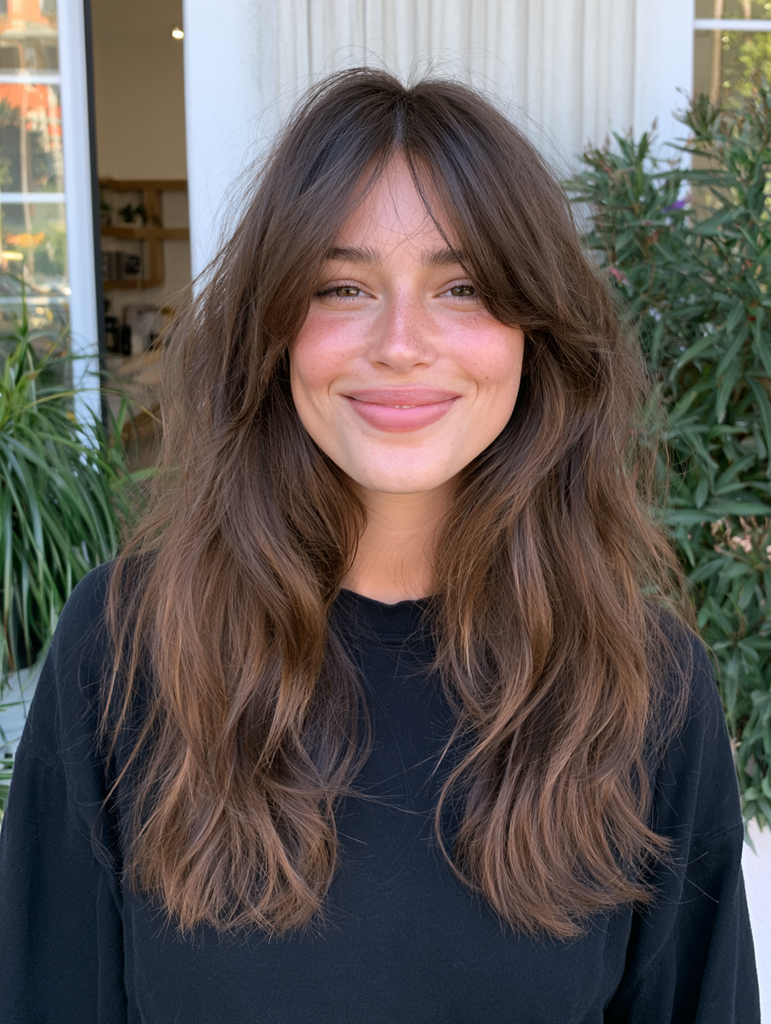
Apply lightweight styling mousse and shape the fringe away from the center using your fingers or a round brush. Encourage gentle movement throughout the longer layers rather than creating uniform curls. Once dry, separate selected sections lightly and preserve some natural irregularity for an effortless, dimensional finish.
Why Layers and Bangs Make Long Hair So Versatile
Combining layers with bangs allows significant change without sacrificing the overall length. Fringe can alter the front silhouette immediately, while carefully positioned layers introduce movement through areas that might otherwise appear heavy, flat, or overly uniform.
The combination also offers flexibility as the haircut grows. Longer bangs can transition into curtain fringe or facial layers, while softer layers usually blend naturally between appointments. More dramatic shags, butterfly shapes, or micro bangs may need regular maintenance to preserve their intended proportions.
How to Style Long Layered Hair With Bangs
Begin by styling the bangs because shorter front sections dry more quickly and can become difficult to redirect once set. Use lightweight products around the fringe and concentrate richer conditioning treatments through the longer, older ends where additional moisture may be needed.
For the remaining layers, broad waves and smooth blowouts reveal differences in length without requiring excessive styling. Direct facial sections away from the face when you want more openness, or allow them to fall naturally forward for softer framing. Always use suitable heat protection with hot tools.
Final Thoughts
Long hairstyles with layers and bangs can range from romantic cascading cuts and glamorous butterfly layers to curly shapes, textured shags, blunt fringes, and modern bottleneck bangs. Combining these elements creates countless opportunities to personalize long hair while maintaining its versatility.
Consider density, natural texture, facial proportions, shrinkage, and daily styling habits before choosing your fringe and layer placement. When both elements are designed to work together, long hair can feel lighter, more dimensional, beautifully framed, and noticeably refreshed without sacrificing its flowing length.
