Long hairstyles with layers bring movement and dimension to hair without sacrificing the length you have worked hard to maintain. Carefully positioned layers can remove unnecessary heaviness, encourage natural texture, create softer facial framing, and make long hair feel more dynamic. Whether your hair is straight, wavy, curly, fine, or thick, layering can be adapted to suit its individual characteristics.
The placement of each layer matters just as much as its length. Fine hair usually benefits from restrained layering that protects density, while thick hair can accommodate greater weight removal. These 18 long hairstyles with layers explore soft, glamorous, textured, and low-maintenance approaches that can transform lengthy hair while keeping its overall silhouette beautifully substantial.
How Layer Placement Changes the Look of Long Hair
Long layers can begin near the cheekbones, jaw, shoulders, or much farther down the hair. Higher layers generally create stronger movement and volume, while lower layers produce a subtler effect that maintains more visible density through the ends.
Texture should also influence the approach. Straight hair reveals every graduation clearly, whereas waves and curls naturally blend differences in length. Discussing your everyday styling routine with your hairstylist can help determine how dramatic or restrained the layering should become.
Long Butterfly Layers
Butterfly layers combine shorter facial sections with cascading longer layers throughout the remaining hair. The dramatic difference creates airy movement around the crown while preserving substantial length through the back, making this hairstyle especially appealing when you want noticeable change without committing to shorter hair.

Blow-dry the facial layers away from the face using a large round brush to emphasize their sweeping shape. Create gentle bends throughout the longer sections rather than tightly curling everything. Lightweight volumizing mousse at the roots can enhance the characteristic lifted butterfly effect.
Long Face-Framing Layers
Face-framing layers introduce gradually shorter sections around the cheekbones, jaw, and neckline while leaving most of the overall length intact. This approach adds movement exactly where it is most visible without requiring extensive layering throughout the entire hairstyle.

Style the shorter front pieces with a round brush or large curling tool, directing them away from the face for an open finish. Leave the remaining lengths relatively smooth or add loose waves. Lightweight serum through the ends can provide polish without flattening the facial movement.
Long Cascading Layers
Cascading layers create a gradual progression of lengths that flow smoothly from the upper sections toward the ends. The transitions remain soft rather than dramatically disconnected, producing natural movement that looks particularly beautiful when long hair is styled with waves.

Apply lightweight styling cream before drying and create broad bends through the mid-lengths. Direct neighboring sections in slightly different directions for greater dimension. Once cooled, loosen the waves gently with your fingers. Avoid excessive brushing if you want the cascading layers to remain clearly visible.
Long Layers With Curtain Bangs
Long layers with curtain bangs combine flowing lengths with a softly divided fringe that opens around the forehead. The bangs gradually transition into facial layers, creating a continuous shape rather than appearing disconnected from the rest of the haircut.

Blow-dry the curtain fringe forward initially, then direct each side away from the face using a round brush. Add gentle movement through the longer layers for consistency. Keeping the crown softly elevated helps the fringe and surrounding sections blend into an airy, balanced silhouette.
Long V-Cut Layers
A V-cut creates a pointed outline through the back while internal layers add movement throughout the lengthy silhouette. The gradual perimeter preserves impressive overall length, yet the angled shape prevents the ends from appearing like one heavy horizontal line.

Style the hair smooth when you want the V-shaped outline to appear especially noticeable. Alternatively, create loose waves through the mid-lengths to emphasize individual layers. Regular trimming can help preserve the distinctive back shape and prevent the longest central section from becoming excessively thin.
Long Feathered Layers
Feathered layers create soft, sweeping movement by encouraging the ends to curve away from the face and surrounding sections. The technique gives long hair a lighter appearance while maintaining enough density to keep the overall hairstyle full and substantial.

Apply volumizing mousse before blow-drying with a large round brush. Direct each layered section outward to create the characteristic feathered finish. Once the hair cools, loosen the shape gently with your fingers. Flexible hairspray can preserve movement without making the layers feel stiff or overly controlled.
Long Layers for Thick Hair
Long layers can remove strategic weight from thick hair while preserving its impressive density and length. Interior shaping prevents excessive bulk from collecting through the lower sections, helping the hair move more freely and making everyday styling considerably easier.

Ask for weight removal that respects your natural texture rather than excessive thinning throughout the ends. Apply smoothing cream before drying and style the layers in broad sections. Loose waves can emphasize movement beautifully, while a straighter finish showcases the haircut’s controlled distribution of density.
Long Layers for Fine Hair
Fine long hair benefits from restrained layering that creates movement without removing too much valuable density. Longer, subtle layers can prevent the hairstyle from appearing completely flat while maintaining a substantial perimeter that helps the ends look noticeably fuller.

Apply lightweight volumizing mousse primarily around the roots before drying. Use a large round brush to create gentle crown elevation and soft bends through the lengths. Avoid heavy oils or rich creams near the roots, since excessive product can quickly collapse volume and reduce movement.
Long Shaggy Layers
Long shaggy layers create deliberately relaxed movement through varied lengths around the crown, sides, and ends. The less structured arrangement produces a carefree silhouette that works particularly well with naturally wavy hair or anyone who enjoys an intentionally undone finish.

Apply texturizing mousse or lightweight wave cream to damp hair and scrunch gently. Air-dry or diffuse according to your natural texture. Once completely dry, separate selected sections with your fingertips and lift the crown. Avoid making every wave identical because irregularity gives the style its distinctive personality.
Long Layers With Side-Swept Bangs
Long layers with side-swept bangs introduce diagonal movement around the forehead while gradually blending the fringe into longer facial sections. The combination creates soft framing without requiring the commitment of a full, straight-across fringe.

Apply lightweight styling foam and establish the fringe direction while the hair remains damp. Blow-dry the bangs sideways using a round brush, then create gentle movement throughout the remaining layers. Keep the finish flexible so the front sections blend naturally instead of appearing heavily sculpted.
Long U-Shaped Layers
A U-shaped layered haircut creates a softly curved perimeter through the back instead of a sharp point or straight horizontal edge. Subtle internal layers complement the rounded outline, giving long hair movement while preserving a noticeably full appearance.

Style the lengths with broad, loose bends to emphasize the gradual transitions between layers. A smooth blowout also works beautifully when showcasing the curved perimeter. Keep the longest ends regularly trimmed so the U-shaped outline remains substantial and does not gradually become uneven or sparse.
Long Wavy Layers
Long wavy layers are designed to encourage natural bends while preventing excessive weight from stretching the texture downward. Carefully positioned layers allow waves to develop at different heights, creating a dimensional silhouette with noticeably greater movement.

Apply lightweight wave cream or mousse to damp hair and scrunch gently from the ends upward. Air-dry or diffuse until completely set before separating any sections. Once dry, lift selected crown roots and loosen only a few waves. Minimal manipulation helps maintain definition while controlling unwanted frizz.
Long Curly Layers
Long curly layers distribute volume throughout the hairstyle so curls can develop without excessive weight pulling them downward. Strategic shaping can prevent an overly triangular silhouette while preserving substantial length and allowing individual curl groups to move naturally.

Apply moisturizing leave-in conditioner followed by curl-defining cream or gel to wet hair. Encourage natural curl groups and allow everything to dry completely before lifting the roots. Avoid aggressive separation because maintaining broader curl groups can preserve definition while still showcasing the haircut’s layered structure.
Long Invisible Layers
Invisible layers remove strategic interior weight while leaving the external silhouette looking relatively seamless. Because the transitions are subtle, the haircut gains movement without displaying obviously shorter sections, making it ideal for women who prefer understated layering.

Style the hair smooth to appreciate the gentle movement created internally, or add broad waves for additional dimension. Lightweight styling cream can control flyaways without disguising the subtle structure. This technique works particularly well when you want easier movement while maintaining a visually substantial perimeter.
Long Choppy Layers
Long choppy layers create stronger separation between different lengths, producing a textured, contemporary silhouette with noticeable movement. The intentionally less-blended finish adds personality and works particularly well when you prefer hairstyles that appear slightly undone rather than perfectly polished.

Apply texturizing mousse before drying and encourage bends in alternating directions throughout the lengths. Once completely cool, separate selected pieces using your fingertips. Avoid smoothing everything together afterward because visible distinction between sections is part of what gives choppy layering its modern, expressive appearance.
Long Layers With Flipped Ends
Long layers with flipped ends combine flowing length with playful outward movement around selected sections. The turned ends make each layer easier to distinguish, creating a lively finish that feels polished while avoiding the uniform appearance of completely straight hair.

Apply heat protection and lightweight styling foam before blow-drying. Use a large round brush to direct layered ends outward, concentrating especially around the face and shoulders. Allow the sections to cool before loosening them gently. Finish with flexible hairspray to preserve movement without creating stiffness.
Long Rounded Layers
Long rounded layers create a smooth, flowing silhouette by following curved rather than sharply disconnected lines throughout the haircut. The gradual shape encourages movement while preserving fullness, making it a versatile choice for women who prefer softer, more blended layering.

Blow-dry with a large round brush to emphasize the curved movement through each section. Direct facial pieces gently away from the face and keep the longer back layers smooth. Finish with lightweight serum through the ends, avoiding excessive application around the roots where volume is most valuable.
Long Layered Hair With Bottleneck Bangs
Bottleneck bangs begin shorter near the center before gradually lengthening toward the sides, where they blend into long facial layers. Combined with lengthy hair, this fringe creates a seamless transition from forehead framing into cascading movement through the sides.
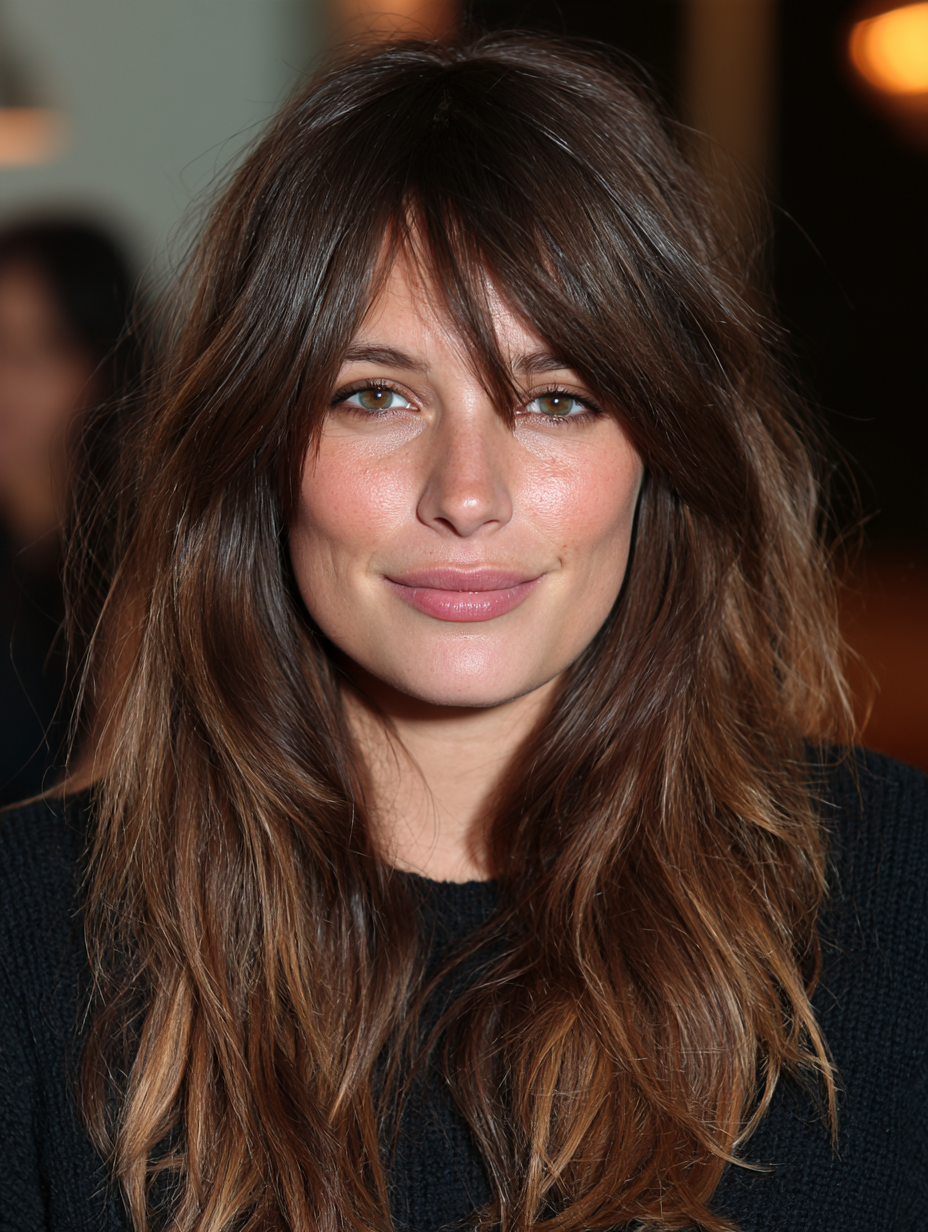
Style the center fringe softly forward while directing the longer outer sections away from the face. Add loose waves throughout the remaining layers to maintain visual continuity. Lightweight styling spray can provide control while allowing the bangs and surrounding pieces to move naturally throughout the day.
Why Long Layered Hair Continues to Feel Timeless
Layering provides one of the easiest ways to refresh long hair without sacrificing substantial length. Changing the height, intensity, or placement of layers can transform the silhouette while preserving enough hair for ponytails, braids, buns, and other versatile styling options.
Long layers can also evolve naturally between appointments. Softer techniques generally grow out gracefully because the differences between sections remain blended. More dramatic butterfly, shaggy, or choppy layers may require additional shaping to preserve their intended proportions as the hair becomes longer.
How to Style Long Layered Hair for Maximum Movement
Focus styling on the areas where the layers are most visible. Facial pieces often benefit from being directed away from the face, while crown layers can gain dimension through moderate root lift. Broad waves are particularly effective because they reveal differences in length without making the hairstyle overly curled.
Choose styling products according to density and texture. Fine hair usually benefits from lightweight volumizing formulas, while thick or coarse hair may require additional smoothing and moisture. Always use appropriate heat protection when regularly blow-drying, curling, or straightening lengthy layered hair.
Final Thoughts
Long hairstyles with layers can range from subtle invisible shaping and U-shaped cuts to dramatic butterfly layers, feathered movement, curtain bangs, and textured shags. Each technique changes how long hair falls while preserving the versatility and beauty associated with greater length.
The strongest option should complement your density, natural texture, styling habits, and preferred amount of movement. With thoughtful layer placement and regular maintenance, long hair can feel lighter, fuller, more dimensional, and significantly easier to style without sacrificing its impressive length.
