Short layered hairstyles for thick hair can transform natural fullness into a beautifully balanced, manageable shape. Instead of fighting density, carefully positioned layers redistribute weight, encourage movement, and prevent shorter cuts from becoming excessively bulky around the sides or perimeter. From textured pixies and airy bixies to stacked bobs and curly crops, layering gives thick hair structure while preserving its naturally luxurious appearance.
The best approach depends on strand texture, density, growth patterns, and desired maintenance. Straight thick hair may need internal weight removal, while waves, curls, and coils require layers that respect their natural formation and shrinkage. These 18 short layered hairstyles for thick hair provide versatile ideas for creating lighter, more defined silhouettes without sacrificing the fullness that makes thick hair distinctive.
Why Strategic Layers Work So Well With Thick Hair
Layering helps redistribute density instead of simply shortening the entire haircut. Internal layers can remove hidden bulk, crown layers encourage movement, and longer facial pieces maintain softness. This makes it possible to preserve substantial hair while preventing the finished silhouette from feeling heavy or triangular.
However, excessive thinning can create unwanted expansion, particularly with coarse, wavy, curly, or frizz-prone textures. Strategic weight removal is usually more effective than aggressive thinning. Your stylist should consider how the hair behaves naturally before determining where shorter sections should begin.
Textured Layered Pixie
A textured layered pixie removes substantial weight through the sides and back while preserving additional length across the crown. Thick hair provides enough density to support pronounced texture, allowing the upper sections to appear dimensional without exposing sparse areas between individual layers.

Apply lightweight styling cream to damp hair and finger-dry the crown in several directions. Keep the sides comparatively controlled to emphasize the upper texture. Once completely dry, define selected pieces with minimal matte paste. Avoid coating every layer because natural separation already creates plenty of movement.
Short Layered Bob With Side Part
A short layered bob uses internal shaping to remove unnecessary bulk while maintaining a recognizable, substantial perimeter. Adding a side part creates asymmetry through the crown, preventing dense hair from forming an overly uniform or triangular silhouette.

Apply smoothing mousse and establish the side part while the hair remains damp. Blow-dry with a medium round brush, directing the roots according to the desired shape. Keep the ends softly controlled rather than excessively rounded. Finish with lightweight serum through the lower sections when additional smoothness is needed.
Layered Bixie With Long Bangs
A layered bixie offers a practical middle ground between a pixie and bob, making it particularly effective for women who want shorter thick hair without removing too much length. Long bangs provide softness while internal layers reduce heaviness throughout the crown.

Apply lightweight mousse before blow-drying the upper sections with gentle elevation. Direct the longer fringe diagonally and keep the neckline controlled. Once dry, separate several layers using flexible styling cream. Allow broader sections to remain naturally grouped so the haircut retains softness despite its substantial texture.
Short Shag With Curtain Bangs
A short shag uses intentionally varied layers to break up the density of thick hair and create relaxed movement throughout the crown and sides. Curtain bangs provide softer facial framing while blending naturally into the shorter surrounding sections.

Apply texture cream or lightweight mousse to damp hair and finger-dry according to its natural movement. Direct the curtain bangs away from the face without making them excessively smooth. Once dry, define selected crown pieces. The finish should remain slightly irregular because controlled imperfection gives the shag its characteristic personality.
Rounded Layered Bob
A rounded layered bob works with thick hair by distributing fullness evenly around the head rather than allowing excessive weight to collect at the perimeter. Subtle internal layering creates movement while maintaining the polished curvature associated with a classic rounded shape.

Apply smoothing mousse and blow-dry using a medium round brush. Maintain moderate crown elevation and create broad curvature through the sides. Avoid aggressively turning every end inward, which can make dense hair appear excessively round. Finish lightly so the haircut remains controlled but naturally movable.
Feathered Short Pixie
A feathered pixie uses directional layering to make thick hair appear lighter and more fluid. Shorter sides control density around the ears, while longer feathered sections through the crown create airy movement and provide numerous styling possibilities.

Apply lightweight mousse and blow-dry the crown upward and slightly outward using a small round brush. Direct several front sections toward one side for softness. Once cool, separate selected layers with your fingertips and minimal cream. Thick hair generally provides enough natural structure that heavy finishing products are unnecessary.
Short Layered Curly Bob
A layered curly bob removes strategic weight while preserving enough length for individual curls to form properly. Well-positioned layers prevent excessive lower bulk and help distribute natural volume through the crown, sides, and perimeter for a more balanced silhouette.

Apply moisturizing curl cream or lightweight gel to wet hair and encourage natural curl groups through gentle scrunching. Air-dry or diffuse carefully until completely dry. Lift selected roots afterward to refine the shape. Avoid excessive separation because intact curl groups usually provide better definition and controlled fullness.
Layered Stacked Bob
A layered stacked bob combines graduated back sections with longer pieces toward the front, creating structured elevation through dense hair. Internal weight removal keeps the stacked area from becoming excessively bulky while maintaining the distinctive rounded profile.

Apply smoothing mousse and blow-dry the back with controlled elevation using a round brush. Keep the longer front sections sleek and softly directed toward the face. Once cool, loosen the crown slightly with your fingertips. Avoid excessive teasing because thick hair and graduation already provide substantial natural volume.
Choppy Pixie With Side Fringe
A choppy pixie takes advantage of thick hair’s density by creating noticeable separation through the crown while maintaining a softer side fringe. The contrast between pronounced upper texture and streamlined lower sections gives the haircut a bold but wearable character.

Apply lightweight texture cream before finger-drying the crown in alternating directions. Sweep the fringe diagonally and keep it softer than the upper layers. Once dry, define several pieces with matte paste. Avoid making every section equally spiky, since variation creates a more sophisticated textured finish.
Wavy Layered French Bob
A wavy layered French bob combines compact jaw-level proportions with strategic weight removal that allows thick waves to move more freely. Subtle layers prevent the lower perimeter from becoming overly heavy while maintaining enough density for the bob to retain its recognizable shape.

Apply wave cream or lightweight mousse to damp hair and scrunch gently. Air-dry or diffuse until completely set. Arrange several facial sections with your fingertips and avoid brushing through the finished waves. Controlled layering allows natural texture to provide most of the hairstyle’s movement and dimension.
Tapered Layered Crop
A tapered layered crop gradually reduces length around the neckline and ears while maintaining additional texture through the crown. This approach controls thick hair where excessive density can feel cumbersome while preserving enough upper length for versatile styling.

Apply lightweight styling cream and blow-dry the crown according to your desired direction. Keep the tapered sections close to the head without pressing them completely flat. Once dry, define selected upper layers with your fingertips. Flexible hairspray can provide additional control without creating a stiff or overly sculpted appearance.
Short Layered Hair With Flipped Ends
Flipped ends introduce outward movement through a short layered haircut, helping dense hair feel lighter around the perimeter. The directional finish emphasizes individual layers while preventing thick strands from collecting into one heavy, inward-curving shape.

Apply heat protection and smoothing mousse before blow-drying. Use a round brush to direct selected ends outward, varying their placement rather than flipping everything identically. Let the sections cool completely before loosening them with your fingers. Finish lightly to maintain movement and prevent unnecessary stiffness.
Layered Pixie Bob With Side Sweep
A layered pixie bob keeps the neckline compact while preserving generous length through the crown and front. Thick hair provides enough density to support pronounced movement, while internal shaping prevents the longer sections from becoming excessively heavy.

Apply smoothing mousse or lightweight volumizing foam before blow-drying. Sweep the front diagonally and create gentle crown elevation. Keep the lower sections controlled and use minimal styling cream through selected ends. The resulting silhouette should appear substantial but movable, with the side sweep providing its strongest directional feature.
Layered Natural Coily Crop
A layered coily crop uses intentional shaping to distribute thick natural texture throughout the crown and sides. Strategic length variation prevents excessive concentration in one area while allowing individual coil groups to maintain their definition and expressive volume.

Apply moisturizing leave-in conditioner followed by curl-defining cream or gel to wet hair. Encourage natural coil groups with minimal manipulation, then air-dry or diffuse gently. Once completely dry, lift selected roots to refine the silhouette. Avoid excessive separation if maintaining definition and controlling expansion are important.
Asymmetrical Layered Bob
An asymmetrical layered bob combines uneven perimeter lengths with internal shaping, creating strong directional movement through thick hair. The longer side provides dramatic facial framing, while the shorter section removes weight and keeps the overall silhouette contemporary.

Apply smoothing product and heat protection before blow-drying. Direct the longer side downward with gentle movement and keep the shorter section comparatively streamlined. Once cool, use minimal finishing cream through the ends. Keeping the surface polished allows the asymmetrical structure itself to remain the primary visual feature.
Tousled Layered Crop
A tousled layered crop uses shorter sections throughout the crown to encourage relaxed, irregular movement. Thick hair gives the style substantial texture, while controlled sides prevent the upper volume from expanding into an overly wide silhouette.

Apply lightweight texture mousse and finger-dry the crown in several directions. Once completely dry, define selected layers with matte cream while leaving others naturally grouped. Avoid using too much product because thick hair already provides considerable structure. A flexible finish keeps the deliberately undone texture soft and touchable.
Layered Bob With Wispy Bangs
A layered bob with wispy bangs balances the natural density of thick hair with a lighter, softer fringe. Internal layers reduce unnecessary bulk through the sides, while the delicate bangs create contrast and provide subtle facial framing without adding heaviness around the forehead.

Blow-dry the fringe forward with minimal tension and shape the remaining hair using a medium round brush. Keep the bangs airy and avoid applying heavy styling products near them. Once dry, loosen the side layers gently and finish with flexible spray for natural, comfortable movement.
Brushed-Back Layered Pixie
A brushed-back layered pixie uses the natural strength of thick hair to create controlled elevation through the crown and front. Shorter sides keep the silhouette streamlined, while longer upper layers move backward to produce a confident, open finish.
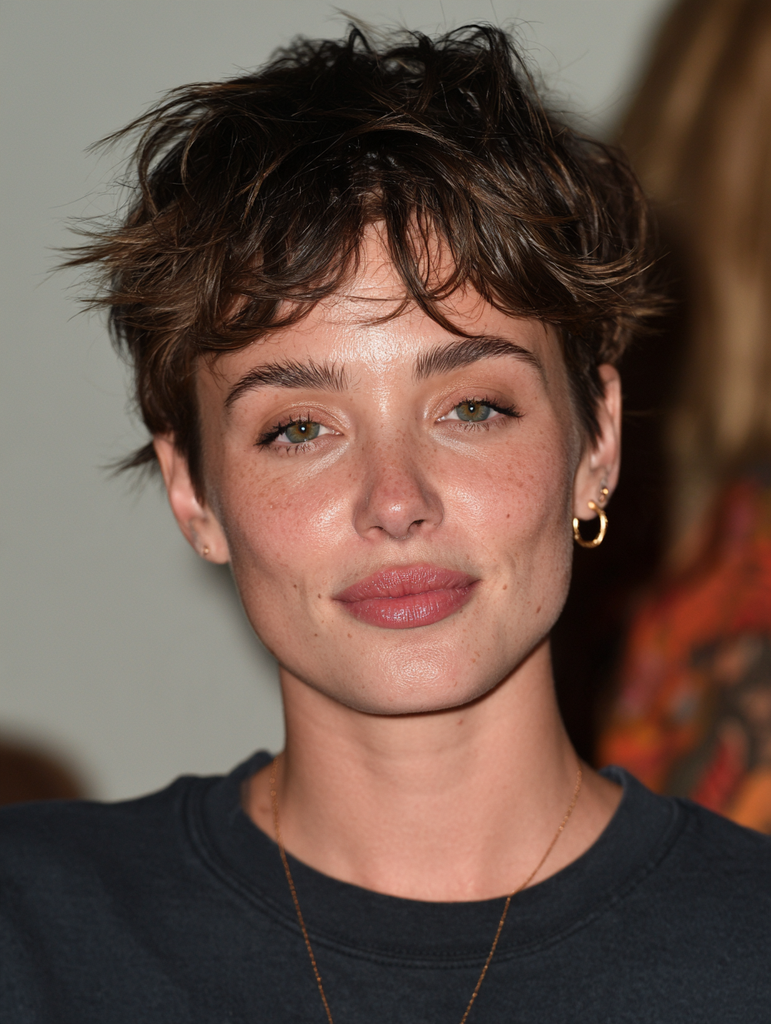
Apply lightweight styling mousse and blow-dry the upper sections upward and backward. Allow the hair to cool before arranging it with your fingers. Keep the sides controlled and use minimal flexible cream through the crown. Finish lightly with hairspray to maintain elevation without creating an excessively rigid appearance.
Why Layered Cuts Make Thick Hair Easier to Manage
Thick hair provides beautiful natural fullness, but concentrated weight can make shorter hairstyles difficult to control. Strategic layers redistribute that density, helping the haircut move naturally while preventing excessive heaviness around the sides, back, or perimeter.
The technique should be customized to texture. Straight thick hair may respond well to discreet internal layers, while curls and coils need careful shaping that considers shrinkage. Wavy hair often benefits from layers that encourage existing bends instead of forcing them into a smooth shape.
How to Style Short Thick Hair Without Creating Extra Bulk
Begin with products that provide control without excessive weight. Smoothing mousse, lightweight creams, and curl-defining formulas can help different textures maintain their intended shape. Apply richer products mainly through the mid-lengths and ends rather than concentrating them around the roots.
Direct volume deliberately while drying. Crown elevation can create balance, but unnecessary side volume may make an already dense haircut difficult to manage. For waves, curls, and coils, limit manipulation after drying because repeated touching can encourage expansion and frizz.
Final Thoughts
Short layered hairstyles for thick hair provide numerous ways to transform natural density into intentional shape. Textured pixies, layered bixies, stacked bobs, short shags, curly cuts, and tapered crops can all reduce unwanted heaviness while preserving the fullness that makes thick hair so versatile.
The strongest haircut should remove weight strategically rather than thinning indiscriminately. Work with your natural texture, density, growth patterns, and preferred maintenance level. When the layers are carefully positioned, thick short hair can feel lighter, move more freely, and maintain a polished, dimensional silhouette.
